First Impressions: Toyota Hybrid vs Gas
When I first considered the Toyota hybrid vs gas comparison, I was intrigued by the promise of efficiency without sacrificing performance. Toyota has been a pioneer in hybrid technology, and their vehicles often stand out in a crowded market. The sleek design and modern features caught my eye immediately, but I wanted to dig deeper into what really sets these two options apart.
Toyota hybrid vs gas comparison
Fuel Economy: Efficiency That Matters
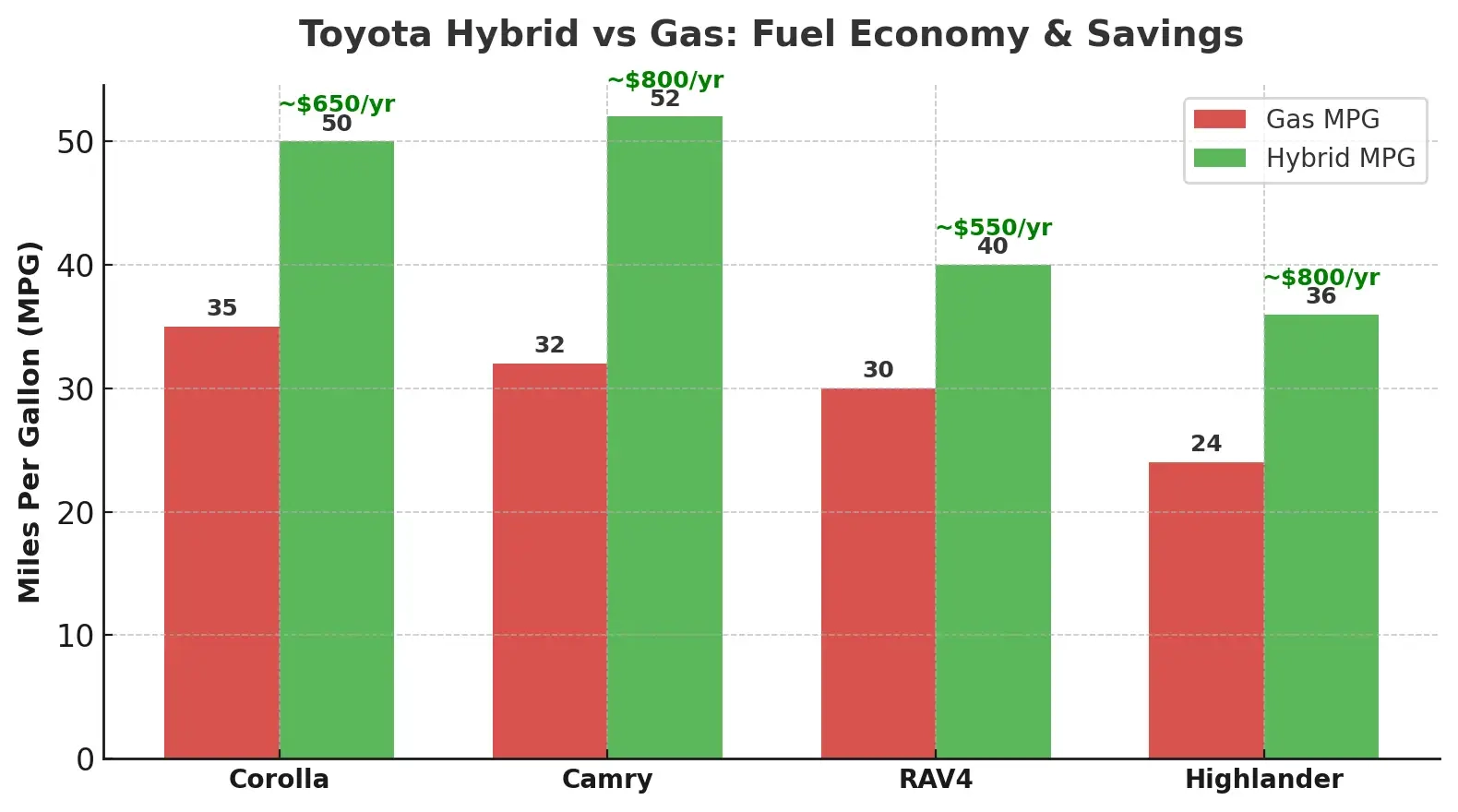
One of the most significant differences I’ve noticed is in fuel economy. The hybrid models, like the Toyota Prius, boast impressive mileage that often exceeds 50 miles per gallon. In contrast, traditional gas models, such as the Toyota Camry, typically range between 25 to 35 miles per gallon. This difference can lead to substantial savings at the pump over time.
Real-World Usage: Daily Driving Experience
In my experience, driving a hybrid feels different than a gas vehicle. The transition between electric and gas power is seamless in hybrids, providing a smooth driving experience. I’ve found that in city driving, hybrids excel due to their ability to run on electric power at lower speeds. This not only enhances fuel efficiency but also reduces emissions significantly.
Performance: Power Under the Hood
While hybrids are known for their efficiency, I was pleasantly surprised by their performance capabilities. The Toyota RAV4 Hybrid, for instance, offers a robust acceleration that rivals its gas counterpart. However, if you’re looking for raw power and a sportier feel, the gas models might be more appealing. They often come equipped with larger engines that deliver a more exhilarating driving experience.
Interior Comfort: Cabin Quality Comparison
Stepping inside both types of vehicles reveals thoughtful design and comfort. The interiors of Toyota hybrids often feature eco-friendly materials and advanced technology. I’ve found that both options provide ample space and comfort for passengers, but hybrids tend to have slightly less cargo space due to battery placement. This is something to consider if you frequently carry large items.
Technology and Infotainment: Staying Connected
When it comes to technology, both hybrid and gas models are equipped with impressive infotainment systems. Features like Apple CarPlay and Android Auto are standard in many Toyota vehicles today. However, I’ve noticed that hybrids sometimes come with additional tech focused on energy efficiency, such as energy consumption displays that help you monitor your driving habits.
Trim Levels and Pricing: What’s Your Budget?
The pricing between hybrid and gas models can vary significantly. Generally, hybrids come with a higher upfront cost due to their advanced technology. However, considering the long-term savings on fuel and potential tax incentives for eco-friendly vehicles can make hybrids more appealing financially over time. It’s essential to weigh these factors based on your budget and driving habits.
Pros and Cons: Weighing Your Options
- Hybrid Pros:
- Exceptional fuel economy
- Lower emissions
- Quiet operation
- Higher initial cost
- Less cargo space
- More powerful engine options
- Larger cargo capacity
- Lower fuel efficiency
- Higher emissions
Final Thoughts: Which One Is Right for You?
The decision between a Toyota hybrid and a gas model ultimately depends on your lifestyle and priorities. If you value fuel efficiency and eco-friendliness, the hybrid is likely the better choice for you. However, if performance and cargo space are at the top of your list, then a gas model might suit your needs better.
I’ve found that both options have their merits, making it essential to consider what matters most in your daily driving experience. Whether you choose hybrid or gas, Toyota continues to deliver quality vehicles that cater to a wide range of preferences.