Understanding the Differences: Toyota AWD vs FWD
In my experience, choosing between Toyota’s all-wheel drive (AWD) and front-wheel drive (FWD) systems can be a bit daunting. Both options have their unique advantages and drawbacks, and understanding these differences can significantly impact your driving experience.
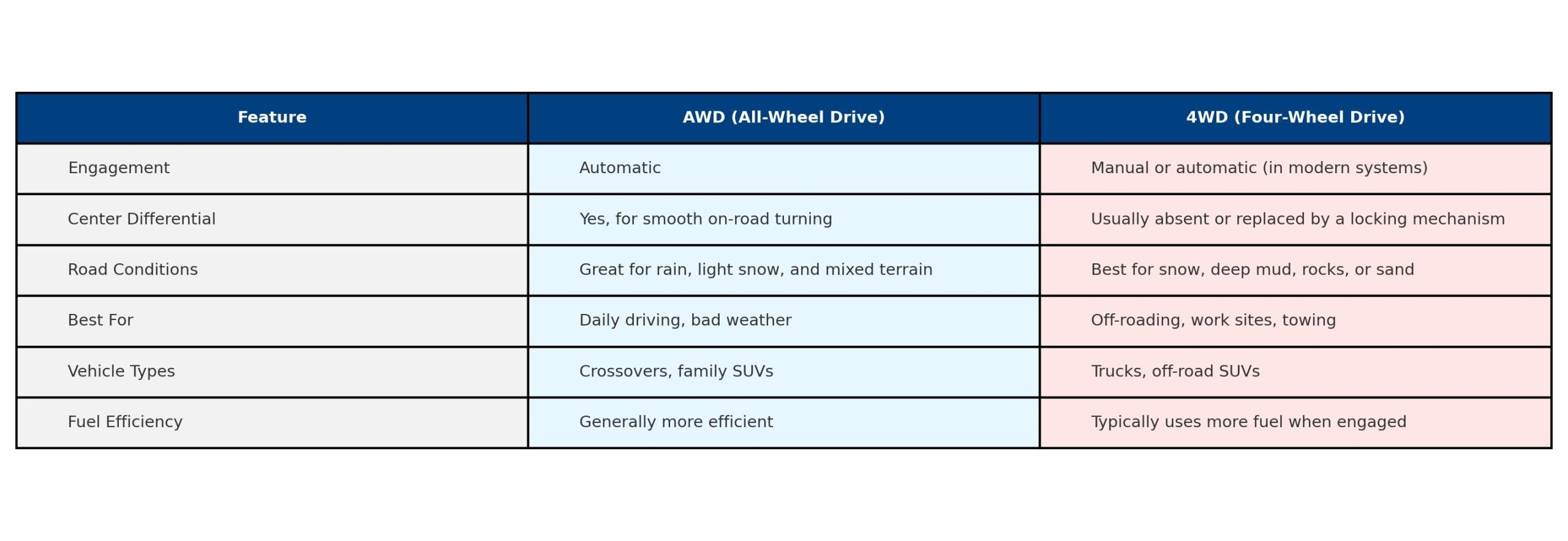
Toyota AWD vs FWD differences
Performance and Driving Experience
When it comes to performance, I’ve found that AWD vehicles tend to offer better traction, especially in adverse weather conditions. The power is distributed to all four wheels, which enhances stability on slippery roads. On the other hand, FWD vehicles are generally lighter and more fuel-efficient, making them a great choice for everyday driving.
Fuel Economy: A Key Consideration
One of the most significant differences I’ve noticed is in fuel economy. Typically, FWD models provide better gas mileage compared to their AWD counterparts. This is largely due to the added weight and complexity of the AWD system. If you’re someone who prioritizes efficiency for daily commutes, FWD might be the way to go.
Interior Comfort and Cabin Quality
Both AWD and FWD models from Toyota offer comfortable interiors, but there can be subtle differences. In my experience, AWD vehicles often come with additional features aimed at enhancing comfort during rough weather conditions. However, FWD models usually provide more cargo space due to their simpler drivetrain layout.
Driving Feel in Real-World Usage
In real-world scenarios, I’ve found that AWD vehicles excel in handling unpredictable terrains. Whether it’s rain-soaked roads or snowy paths, the confidence that comes with AWD is hard to beat. Conversely, FWD vehicles shine in urban settings where tight turns and parking are frequent challenges.
Technology and Infotainment Features
Both drivetrain options come equipped with Toyota’s latest technology and infotainment systems. However, I’ve noticed that AWD models often feature advanced safety technologies designed for enhanced stability. Features like adaptive cruise control and lane-keeping assist are common in both setups but may be more prevalent in higher trims of AWD models.
Exterior Design: Aesthetic Appeal
Aesthetically speaking, there’s not much difference between AWD and FWD models at first glance. However, some AWD variants may have a more rugged design to reflect their capability. I appreciate how Toyota maintains a sleek look across both drivetrains while catering to different customer preferences.
Trim Levels and Pricing
When considering trim levels, it’s essential to note that AWD options often come at a premium price compared to FWD models. In my experience, if you’re looking for a budget-friendly option without sacrificing too much on features, FWD trims usually provide excellent value.
Pros and Cons of Each System
- AWD Pros: Superior traction, better handling in adverse conditions.
- AWD Cons: Higher cost, reduced fuel efficiency.
- FWD Pros: Better fuel economy, lighter weight.
- FWD Cons: Less traction in challenging weather conditions.
Final Thoughts on Choosing Between AWD and FWD
Ultimately, the choice between Toyota’s AWD and FWD systems boils down to your personal needs and driving habits. If you frequently navigate through challenging weather or off-road conditions, I’d recommend considering an AWD model for its enhanced stability. However, if you’re primarily driving in urban environments with an emphasis on fuel efficiency, a FWD vehicle could be your best bet.
No matter which option you choose, Toyota’s commitment to quality ensures that you’ll be satisfied with your decision. Happy driving!